
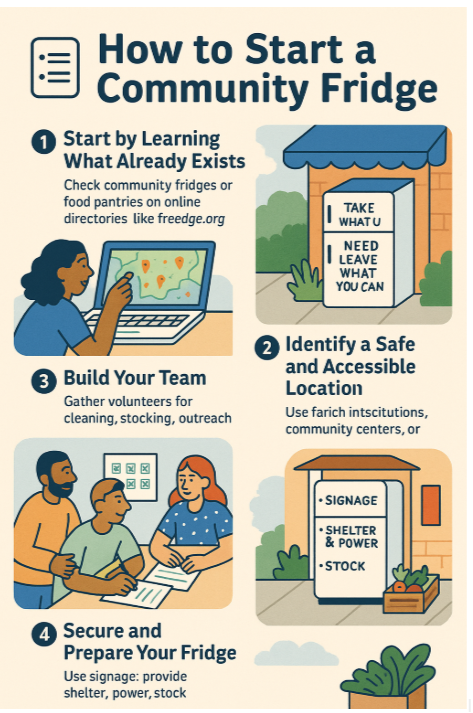
1. Start by Learning What Already Exists.
Before you plug in a new fridge, map the landscape.
- Search local directories: Visit freedge.org or changex.org to see if community fridges or free pantries already exist nearby. Some directories are smaller and regionally focused, for example Buddy System MIA set up ten Community Fridges in Miami-Dade County that can be tracked in their community fridge map.
- Connect with existing groups: Talk to local organizers, churches, food banks, mutual aid collectives, and community centers to learn what’s working — and where there are gaps.
- Ask questions:
- Who currently provides free food in your area?
- What neighborhoods have limited access to fresh food?
- Where might people already go when they need support?
Tip: Joining an existing effort often strengthens local networks and saves resources. Collaboration over duplication!
2. Identify a Safe and Accessible Location.
A community fridge is only as strong as its location. We suggest you pick a location that is easy to access, is in a high traffic area but is also safe to use and minimizes the risk of the fridge contents being tampered with in any way.
Ideal hosts include:
- Faith institutions, libraries, or community centres
- Local cafés, small businesses, or co-ops
- Nonprofits, schools, or mutual aid collectives including Boys and Girls Clubs and YMCA/ YWCA’s
The site should have:
- 24/7 or extended-hour public access
- Reliable electricity and a sheltered space (porch, awning, small structure)
- Foot traffic and visibility, yet enough safety for users at night
Tip: Always get written permission from the property owner or organization hosting the fridge.
3. Build Your Team.
Running a fridge is a community effort. Gather a small group to share responsibilities like:
- Cleaning and maintenance
- Food pickups and restocking
- Communications and community outreach
- Fundraising and partnership building
Create a shared communication channel (WhatsApp, Signal, Airtable, etc.) and a simple rotation or schedule.
4. Secure and Prepare Your Fridge.
What you’ll need:
- A working refrigerator or fridge/freezer combo (used or donated)
- Try to secure a refrigerated cooler with glass doors. This allows community members to see what is inside before opening the fridge, helping them decide which items they would like while minimizing how long the doors stay open.
- Consider using a refrigerated unit with sliding doors, similar to soft drink coolers. These help keep the temperature stable and the food fresh, even with frequent use.
- Attempt reaching out to a local grocer or soda bottler to request a preowned refrigerator in good working condition.
- Outdoor-rated extension cords or weatherproof electrical setup
- Shelter or enclosure to protect from heat and rain
- Signage with your fridge’s name, hours, and guidelines
Sample signage:
“Take what you need. Leave what you can.”
“Please, no raw meat, alcohol, or expired food.”
“Keep our fridge clean! It belongs to all of us!”
5. Develop Food Safety Guidelines.
To keep your community healthy and your fridge running smoothly:
✅ Accept: sealed packaged foods, labelled leftovers from restaurants, fresh produce, dairy in good condition, canned goods.
🚫 Do not accept: raw meat, fish, expired items, unsealed leftovers, alcohol.
Print and post clear guidelines in English, Spanish and/or any other primary language(s) of your community.
You can also consult your local health department for best practices.
📘 Legal note: The Bill Emerson Good Samaritan Food Donation Act and The Food Donation Improvement Act (FDIA) protect donors and volunteers who share food in good faith in the U.S.
6. Organize Daily or Weekly Maintenance.
Create a simple volunteer schedule for:
- Checking the fridge (cleanliness, temperature, expired food)
- The Food Temp Danger Zone starts at 40 degrees and above. Fridge doors that aren’t securely closed can lead to elevated internal temps creating Danger Zone risks. Temps above 40 degrees can cause bacterial growth.
- Restocking with fresh food donations
- Taking photos or notes for accountability and transparency
Apps like Airtable, Google Sheets, or WhatsApp make this easy to track.
7. Build Partnerships.
Your fridge thrives when it’s connected. Consider reaching out to:
- Local farms and CSAs for surplus produce
- Restaurants, restaurant associations, bakeries, or cafés for daily leftovers
- Grocery stores or co-ops for donated goods
- Mutual aid groups or nonprofits for volunteer support
Always be transparent about your fridge’s mission: mutual aid, not charity.
8. Fund and Sustain It.
Costs can be minimal but consistent. Consider:
- Crowdfunding campaigns (GoFundMe, OpenCollective)
- Donation jars at local businesses
- In-kind donations (cleaning supplies, electricity support, storage shelves)
- Local grants for food security or community resilience
9. Communicate and Build Community.
Spread the word so people know it exists!
- Create an Instagram page to share updates and volunteer needs.
- Print flyers for local businesses and schools.
- Invite community members to “own” the fridge through art, signage, or events.
The more it reflects your community, the stronger it becomes.
10. Reflect, Adapt, and Share Your Learning.
After a few months, check in:
- Is the fridge accessible to those who need it most?
- Are volunteers supported?
- Do you need clearer guidelines or more partners?
Share what you’ve learned. Use social media, community meetings, or other platforms like Freedge to inspire others and get the word out.
💡 Final Thoughts.
A community fridge is more than a place for food; it’s a symbol of collective care.
When communities organize to feed one another, they build resilience, dignity, and connection.
“Take what you need. Leave what you can. Care for each other.”
For additional resources on setting up, maintaining and sustaining a community fridge visit fridge.org.