
Jessica and Camille come to this work from different angles, but the question we keep returning to is the same: what does it actually take for a formerly or currently incarcerated person to build a life with real stability and self-determination? For Jessica, the answer has emerged through years of studying cooperative economics. In particular the way worker co-ops provide not just a viable strategy for economic advancement and reintegration of incarcerated people, but also how they contribute to self-determination, economic empowerment, and personal and group transformation for justice-involved people and those around them. For Camille, the answer has emerged through six years of building ChiFresh Kitchen cooperative alongside women who came home from prison and chose to own something together. What we have both found is that worker co-ops offer something no ordinary job can: co-ownership and co-control over not just your livelihood, but your own rehabilitation and your life.
Co-ops are values-based enterprises, member-owned and democratically controlled. Worker co-ops are entirely owned and run by the people who work in them. Incarcerated worker co-ops exist in Puerto Rico, Ethiopia, Peru, Brazil, and South Africa, in farming, food preparation, art, sewing, paving, brick making and more. In the United States, worker co-ops with formerly incarcerated members are growing, though co-ops fully owned and operated by people still incarcerated remain rare. The benefits are real and documented: decent work, co-owned business assets, greater self-determination, new social capital, better mental health, and significantly lower rates of recidivism. The barriers to starting a co-op are also real: lack of information about co-op management and cooperative economics, legal and policy gaps, restricted access to commerce, limited funding, and corrections staff turnover that can force a program to start over. For justice-involved people returning to their communities, worker co-ops and co-op ecosystems specifically and effectively address many challenges previously incarcerated people face—unemployment or bad jobs, marginalization, lack of housing, etc. What makes the difference, time and again, for those incarcerated and those released, in addition to the energy, enthusiasm, and commitment of the members, is a strong co-op ecosystem. This includes an ecosystem that keeps legislative, financial, business, and human support in place from before and after a cooperative enterprise takes root, to full growth.
Chi Fresh Kitchen: Building From the Inside Out
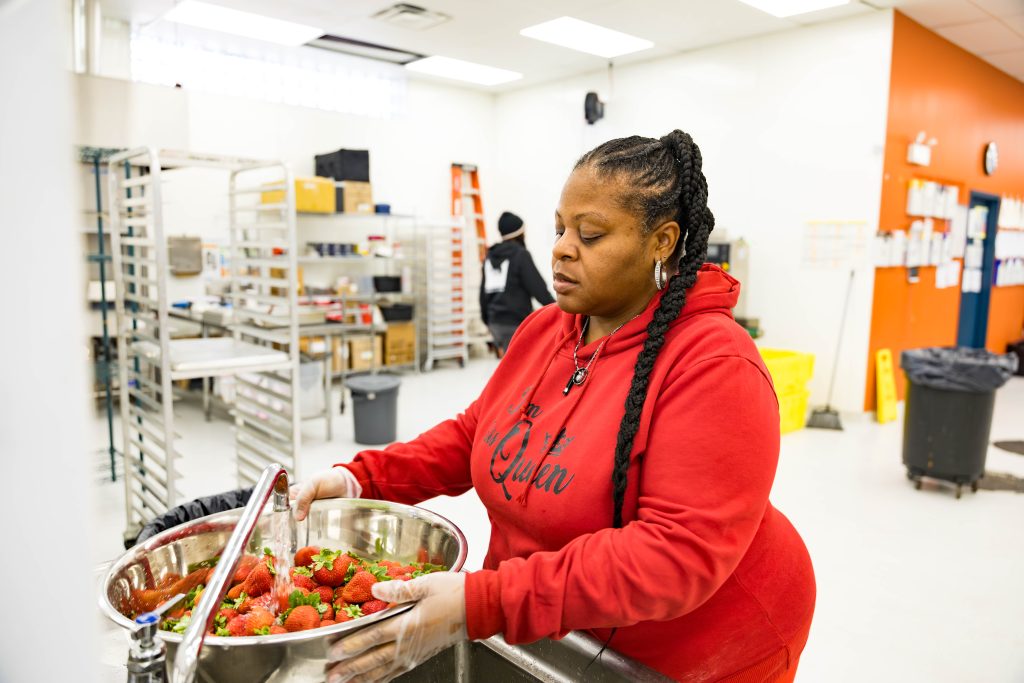
Inside an Illinois prison, Kim Britt was often fed mystery meat or slop. She yearned for fresh fruit. When she had funds in her account, she purchased commissary snacks, heavily processed foods that became the closest thing she had to edible fare. Stripped of one of the core elements of culture, she and others collaborated to prepare celebratory meals out of salvageable ingredients from the dining hall and commissary treats. “We used to make baked potatoes out of crushed chips and water covered in meat.”
Food justice was not a concept that Kim experienced inside those walls, which perhaps is unsurprising in a place where slavery is legal. The 13th Amendment, which ended chattel slavery in 1865, contains a single exception: punishment for a crime. That loophole is not a footnote. It is the legal foundation for prison labor today, and food, including what people are given, denied, or forced to produce, has always been part of how that system exerts control. But on the outside, Kim did not just experience food justice. She helped build it.
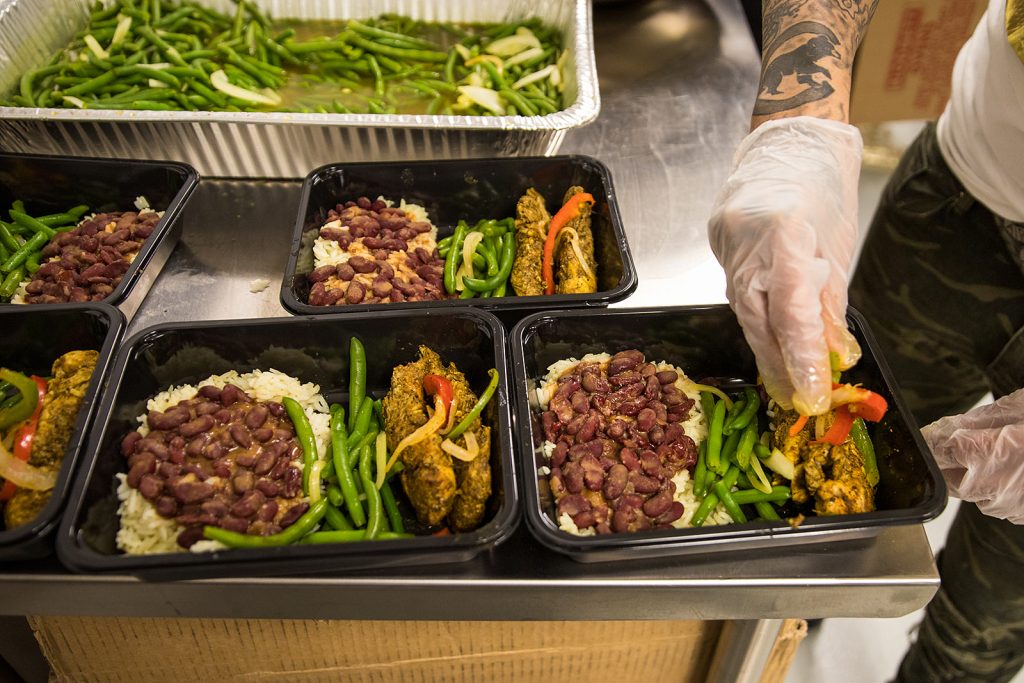
In early 2020, Kim co-founded ChiFresh Kitchen, a worker-owned cooperative. On the first day of production, Edrinna and Renee stood alongside her in a 450-square-foot kitchen preparing ChiFresh’s first fifty meals. The two women had known Kim from inside. Edrinna brought the home-cooking skills that had made her famous in her community; Renee brought years of culinary training. The meal that day was juicy, well-spiced jerk chicken, rice and peas, and sautéed onions and peppers—a meal that had never appeared on the dining hall menu. The food went to a west-side transitional home, where residents were experiencing pandemic-related food insecurity.
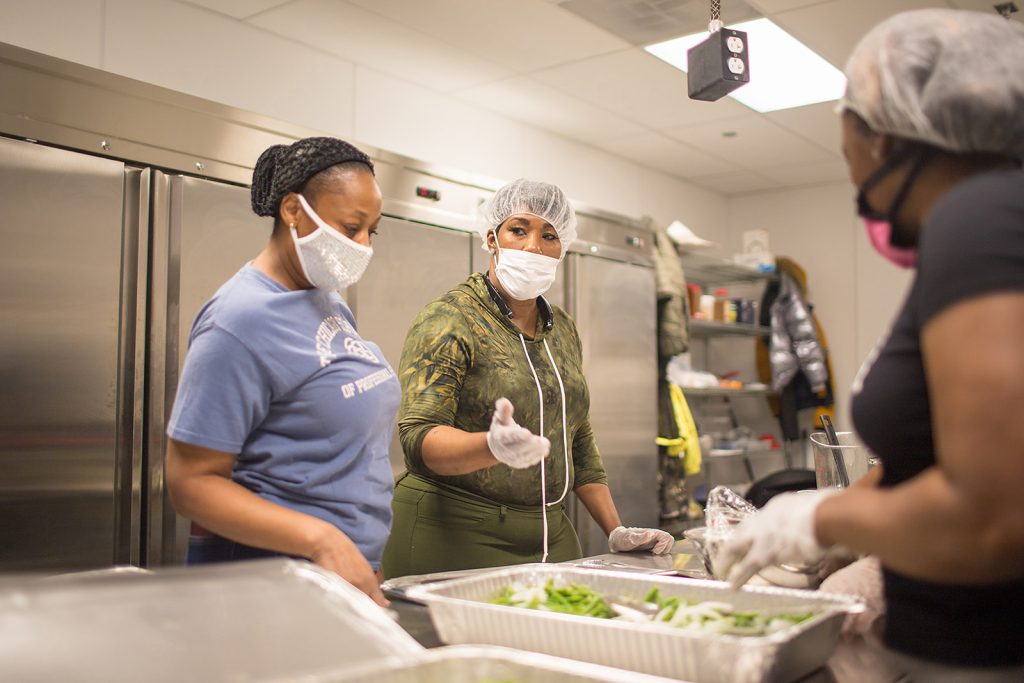
Six years later, the team produces thousands of meals daily, mostly to South and West Side communities where members are from. The menu includes turkey kale meatballs with cabbage and butternut squash, and blackened tilapia with Spanish rice, sweet peas, and mushrooms. They start work before dawn in a recently renovated 6,125 square foot commercial kitchen that they own together. Last Tuesday, Kim, Edrinna, and Renee sat in a conference room with their eight co-owners, collectively making decisions about the business. Chris, co-owner and lead cook, made everyone a pulled chicken sandwich. Someone posted it on Slack. It got a dozen fire emojis.
While food justice is woven into every tray and family meal, the purpose of ChiFresh is not confined to food. It was built to create economic sovereignty for its members. “Having a good job isn’t enough to get a good apartment,” Kim says. “They make up some excuse to exclude you, even though you know it’s because of your background. The only places that would rent to me had roaches. We had this brand new beautiful commercial kitchen, and I didn’t have a safe place to lay my head.”
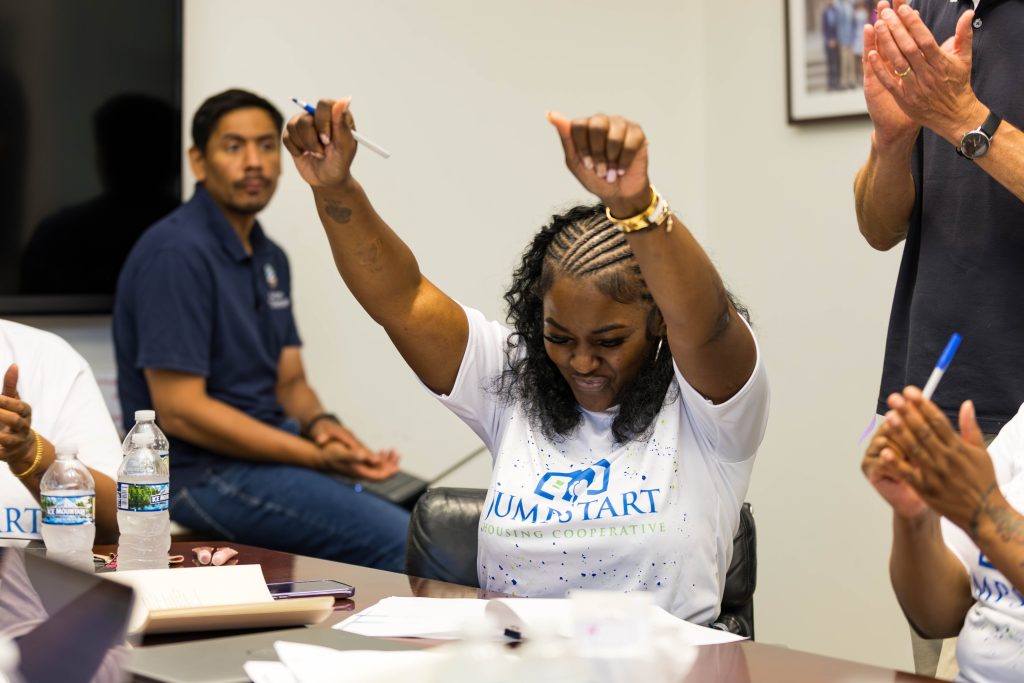
She and Edrinna set out to fix that with Jumpstart Housing Cooperative. In 2023, Jumpstart purchased a 3-flat building in the Bronzeville neighborhood of Chicago. After navigating an 8-month acquisition process and a rehabilitation project that ran over budget and behind schedule, Kim and Edrinna became homeowners and members of their second co-op.
What Ownership Actually Does
Having secured stable housing and meaningful work for themselves, the founding members of ChiFresh set out to create the same opportunities for other formerly incarcerated women, women like Marketta.
On the inside, Marketta Sims lived with roommates who refused to bathe and made noise throughout the night. Outside the walls, she faced homelessness and domestic abuse. “People don’t know, it’s not just romantic relationships. Family commits domestic abuse, too.” The instability meant she couldn’t fully care for her children after returning. “It broke my heart,” she said. “But I told them, if I’m not good, how can I give you anything? I need to get myself together first before I can do anything for ya’ll.”
Through shelters, transitional homes, and the help of people who guided her through the options, she eventually gained stable housing through Section 8 and reunited with her kids. But the struggle continued: slum lords refusing to maintain livable conditions, a bathroom sink that kept falling off the wall, a landlord who never responded.
“I’m ready to leave all that behind,” Marketta said. Through Jumpstart, she is on track to become a homeowner in the neighborhood where the Obama Presidential Center recently opened, a building owned not by a slumlord, but by a cooperative of people who will share sugar, child care, and meals. Maintenance will be handled by a property management co-op owned by fellow justice-involved people she is in community with.
She is also a founding member of CrossTreats, a food manufacturing cooperative where she makes crustless sandwiches and handles purchasing, administration, and compliance. As CrossTreats grows, she is on track for the same benefits ChiFresh members have built: livable wages, health benefits, a 401(k), and profit sharing. “I’m excited to live and work somewhere where I don’t have to pretend that my past never happened,” she says. “And it feels good to do something for the community I came from.”
The Ecosystem They Built
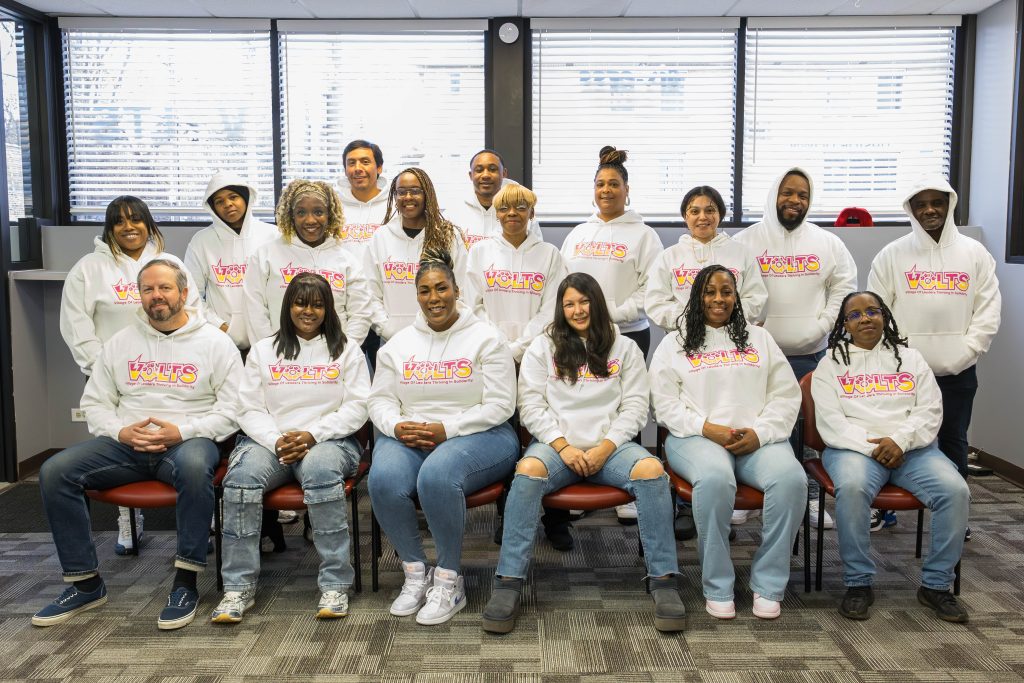
At the Loyola Retreat and Ecology Campus in 2025, members and co-op developers sat in a circle in a commercial kitchen repurposed as a meeting room. Renee led a game where everyone traveled through space. On the walls were options for organizational structures for the new nonprofit that would serve as the hub for all the co-ops, an organization they had named at the 2024 retreat: VOLTS, Village of Leaders Thriving in Solidarity. They debated, decided on two co-executive directors, and chose them. In a visioning session, people called out what they still needed: child care, transportation, affordable financing.
For Kim, the transformation goes far beyond employment. “Inside, we had no control over the food,” she says. “Now we’re creating the foods we craved for ourselves and our community.”
That shift—from having decisions made for you to making them collectively—runs through every part of the VOLTS ecosystem. Through shared ownership, members are gaining control over their labor, their workplaces, and their housing. Just as importantly, they are creating opportunities for others to do the same.
“Shared ownership changed my life. It gave me a way to build something that lasts, not just for myself, but for other women coming home after me. And it gave me a chance to leave my footprint in this work.”
Further reading: Gordon-Nembhard, J. and West, E. (2024). Ecosystem Supports for Incarcerated Worker Co-ops. International Review of Applied Economics. | Moriarty, M. (2016). From Bars to Freedom. Rural Cooperatives, 83(1). | Sbicca, J. and Chennault, C. (2024). It’s Time to Compost the Prison Plantation. The Nation.
Images courtesy of Village of Leaders Thriving in Solidarity by Kai Brown Photography