
In the drought-prone highlands of Baja Verapaz, Guatemala, located within the country’s Dry Corridor, rows of native amaranth shimmer in the sun. Once nearly lost to war and industrial agriculture, Amaranth is a versatile, gluten-free grain and leafy green plant that is a complete protein source. These seeds have been rescued and replanted by the Maya Achí women of Asociación Qachuu Aloom, and now sustain hundreds of families. This work embodies the promise of food sovereignty.
Founded in 2003 by Don Cristóbal Osorio, the Asociación Qachuu Aloom (which means Madre Tierra [Mother Earth] in the Maya Achí language) began as a small initiative with 20 families committed to recovering native seeds and rebuilding their connection to the land after years of conflict. Today, it has grown into a vibrant network of 617 families across the municipalities of San Miguel Chicaj, Rabinal, and Cubulco, where the milpa, the traditional intercropping system of corn, beans, and squash, which enhances soil health, remains both a source of nourishment and a symbol of cultural survival.
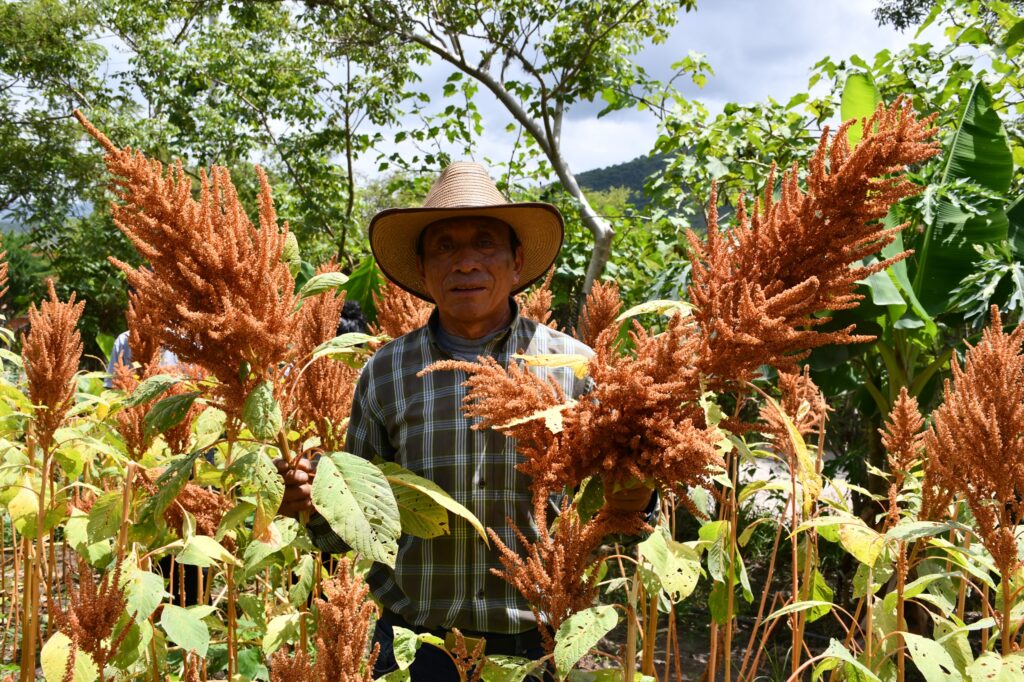
Pictured: Cristóbal Osorio, Founder of Asociación Qachuu Aloom. Image courtesy of Asociación Qachuu Aloom
Seeds as Memory and Resistance
For the families of Qachuu Aloom, saving seeds is more than an agricultural practice; it is an act of resistance, remembrance, and hope. Many of the native varieties they now cultivate were nearly wiped out during Guatemala’s decades-long civil war, which displaced entire communities and disrupted Indigenous farming systems.
Through patient seed recovery, exchange, and teaching, Qachuu Aloom has rebuilt what was once at risk of disappearing: a living seed bank rooted in memory. The organization currently manages more than 50 varieties of seeds.
The seed is the fundamental basis of life because if there is no seed, there is no food. Without seeds, there is no production.— Cristóbal Osorio, Founder
Women at the Heart of the Movement
Women make up the majority of Qachuu Aloom’s membership, leading the cultivation, conservation, and exchange of seeds through the organization’s Casa de Semillas (Seed House).
Eighty-five percent of the members of the association are women. They are the ones who promote the production and exchange of seeds. — Alvaro Zoel Ramos, Coordinador at Asociación Qachuu Aloom
The Seed House functions both as a repository and a space for intergenerational learning, where mothers and grandmothers teach younger generations to plant, harvest, and care for the land according to ancestral principles. Their work illustrates that food sovereignty begins at home, and the important contributions of, in this case women, who safeguard biodiversity, cultural knowledge, and community well-being.
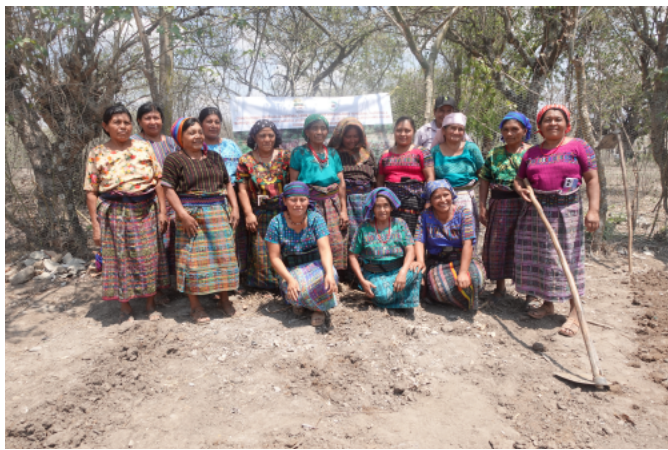
Pictured: Seed producers from the communities of Rabinal. Image courtesy of Asociación Qachuu Aloom.
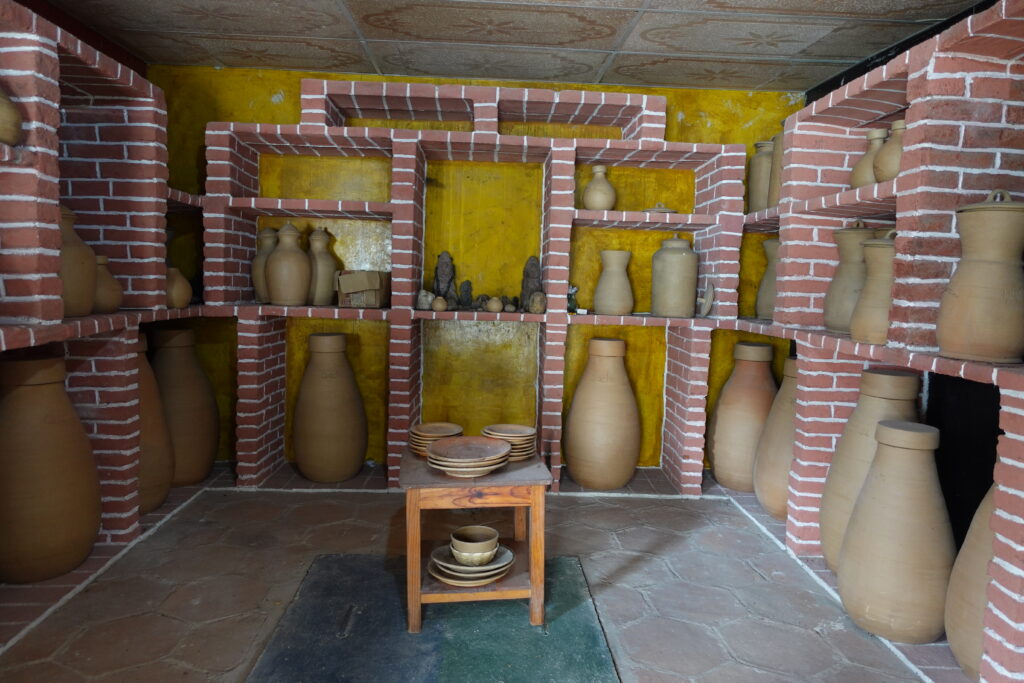
Pictured: Central Seed Bank. Image courtesy of Asociación Qachuu Aloom.
Agroecology and Climate Resilience
Qachuu Aloom promotes agroecology as a way to restore soil fertility and strengthen community resilience to climate change. Farmers rely on organic composting, native microorganisms, and traditional soil management techniques rather than chemical inputs.
As rainfall patterns grow unpredictable and droughts intensify across the region, these methods help maintain productivity and ecological balance. Alvaro shared the example of a 50-day drought that devastated corn crops across the region. However, members of the association were able to withstand the impact far better. The member families used organic compost to enrich the soil which led to a more abundant harvest.
These moments help us build awareness about the impacts of climate change, modified seeds, and chemical and synthetic inputs, and also about the benefits of agroecological practices.” — Alvaro Zoel Ramos, Coordinador at Asociación Qachuu Aloom
Confronting a System Built for Industrial Agriculture
Despite their success, Qachuu Aloom faces a steep uphill battle. Guatemala’s municipal and federal programs routinely distribute genetically modified seeds and synthetic fertilizers, often free of charge or at heavily subsidized prices for families registered with the political party in power. For small farmers struggling economically, these offers are hard to refuse, even when they degrade soil health and threaten the diversity of native crops.
Some farmers have lost native varieties after cross-pollination with hybrid seeds or when fields were converted to monocrops. Yet, through collective organizing, Qachuu Aloom continues to educate communities about the long-term value of autonomy and ecological balance.
From the Ground Up
Beyond food production, Qachuu Aloom’s programs focus on community health, nutrition, gastronomy, economic solidarity, and education. The organization has helped families sell amaranth-based products in local markets, they’ve organized youth to learn about digital storytelling and document community knowledge, and the organization also collaborates with regional networks to advocate for Indigenous rights to land and seeds.
Our goal is for families to use their own plots or gardens, conserve our
seeds, grow their own food, and generate income while also caring for
Mother Earth. – Alvaro Zoel Ramos, Coordinador at Asociación Qachuu Aloom
In our conversation, Alvaro and Cristóbal explained how important it was to commercialize their products—herbs, vegetables, fruits, and legumes—and not just find markets but create them within their own communities.
Their holistic approach ties together the material and spiritual dimensions of food sovereignty, honoring the land as both teacher and Mother.
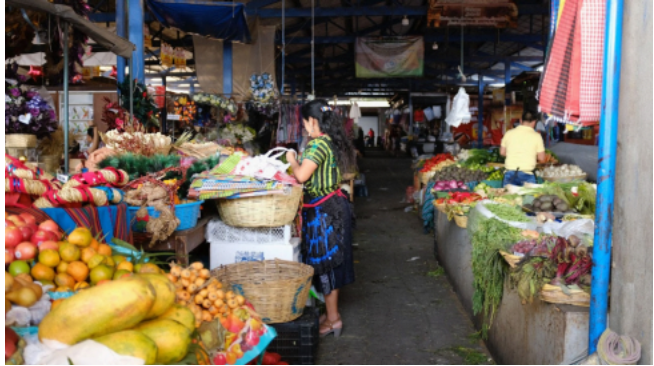
Pictured: A market in Guatemala. Image by Camila Bernal for Food First.
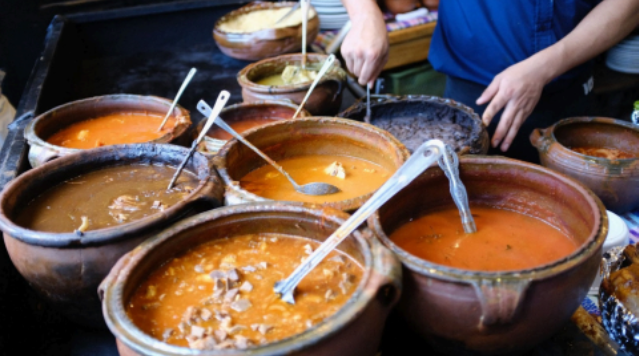
Pictured: Traditional Guatemalan dishes. Image by Camila Bernal for Food First.
Sowing the Future
Looking ahead, Qachuu Aloom envisions creating an Institute for Peasant Science and Seed Production, which would be a training and research center led by Indigenous farmers. This dream reflects their long-term vision: to ensure that the next generation learns “the science of the seed,” not from textbooks, but from the soil itself. Their greatest challenge, as is often the case, is securing the funding needed to acquire the land and resources to bring this vision to life.
For the Maya Achí families of Baja Verapaz, every seed is a story, and every harvest is an act of renewal. Through their commitment, the legacy of Mother Earth continues to grow, one seed, one family, and one milpa at a time.
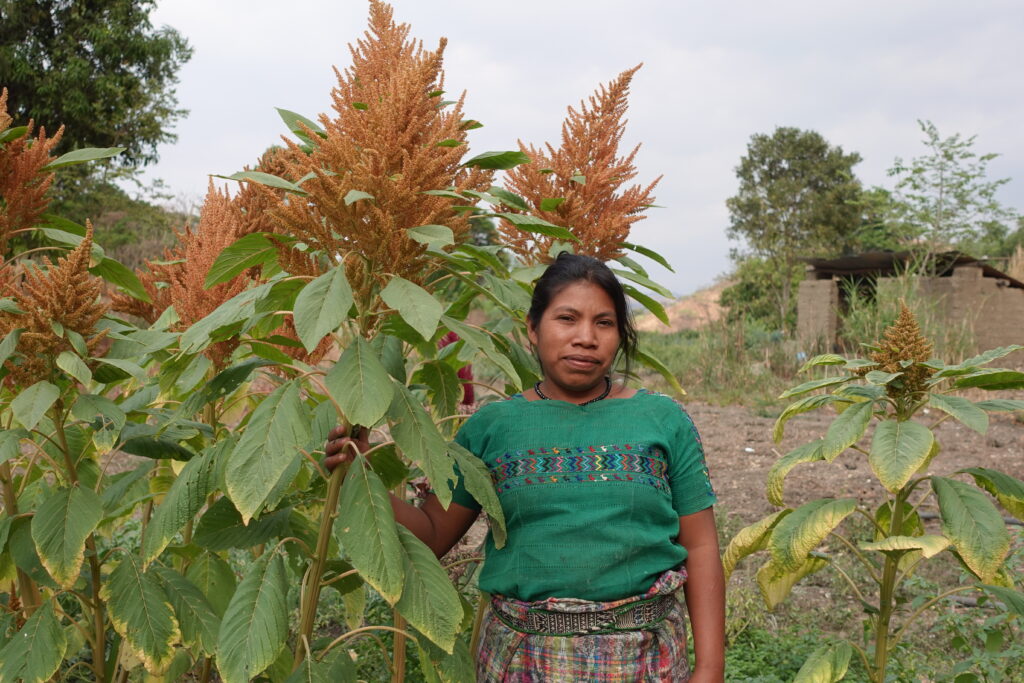
Pictured: Amaranth producer Angélica Manuél. Image courtesy of Asociación Qachuu Aloom.