

 In the U.S., summer brings warmer days, fresh produce, and shared meals. But across the globe and even within our own communities seasonal rhythms vary. What remains constant is the largely invisible labor that keeps our food system running.
Whether in California’s Central Valley, the Peruvian Amazon, or neighborhoods like the Canal in San Rafael, food chain workers, many of them immigrants and undocumented, are the ones who make nourishment possible. They harvest, cook, clean, deliver, and sell food often under exploitative conditions. Their knowledge, dignity, and leadership are routinely overlooked.
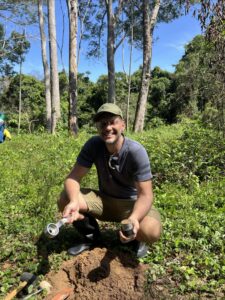
As Director of Education at Canal Alliance in California and President of Instituto Perucano in Iquitos, Peru, I’ve witnessed the deep connection between food justice and immigrant justice. I think of a mother in our Canal community who cleans houses and sells tamales to support her family. I think of a young adult who arrived in the U.S. as an unaccompanied minor, now trying to find work while navigating an uncertain future in immigration court. These aren’t isolated stories, they’re structural, shaped by systems that prioritize profit over people.
And those systems are becoming more dangerous. In the U.S., we’re seeing a political climate where immigrants, especially those who are undocumented, racialized, and working class, are increasingly targeted, surveilled, and scapegoated.
Food chain workers are not expendable—they are essential. They are not voiceless—they are silenced by systems designed to exclude them. And they are not merely laborers—they are caregivers, stewards, organizers, and strategists. Our current food system not only exploits their labor, it actively denies them agency, recognition, and protection.
This reality is mirrored in my academic research. As a master’s student in Sustainable Food Systems at the Universidad Nacional Agraria La Molina (UNALM) in Peru, I’m studying local food supply chains in the Peruvian Amazon. In Iquitos, I’ve met farmers, fishers, and market vendors—many of them women—who nourish their communities through informal, interdependent food networks. Though often invisible to formal policy, they are foundational to regional food sovereignty. Their struggles, marked by economic precarity, state neglect, and the daily labor of survival, echo those of undocumented food workers in the United States.
This is why food sovereignty must be rooted in the liberation of those most affected—immigrants, Indigenous communities, women, Black and brown workers, and those organizing at the intersections of labor, land, and survival. It cannot simply be about relocalizing food or growing more organically. It must be about dismantling extractive systems and redistributing economic, political and cultural power.
At Food First, we are committed to advancing this work, not by speaking for communities, but by amplifying and resourcing those already doing the work of resistance, care, and collective transformation. The struggle for dignity is the struggle for food sovereignty. Let’s make that visible in every bite we take and every system we seek to remake.
In solidarity,
James Sarria