
Food waste is often framed as a problem of excess—too much unused food going to landfills. Of course, the irony is this is happening while too many people are hungry and in need of healthy nutritious food.
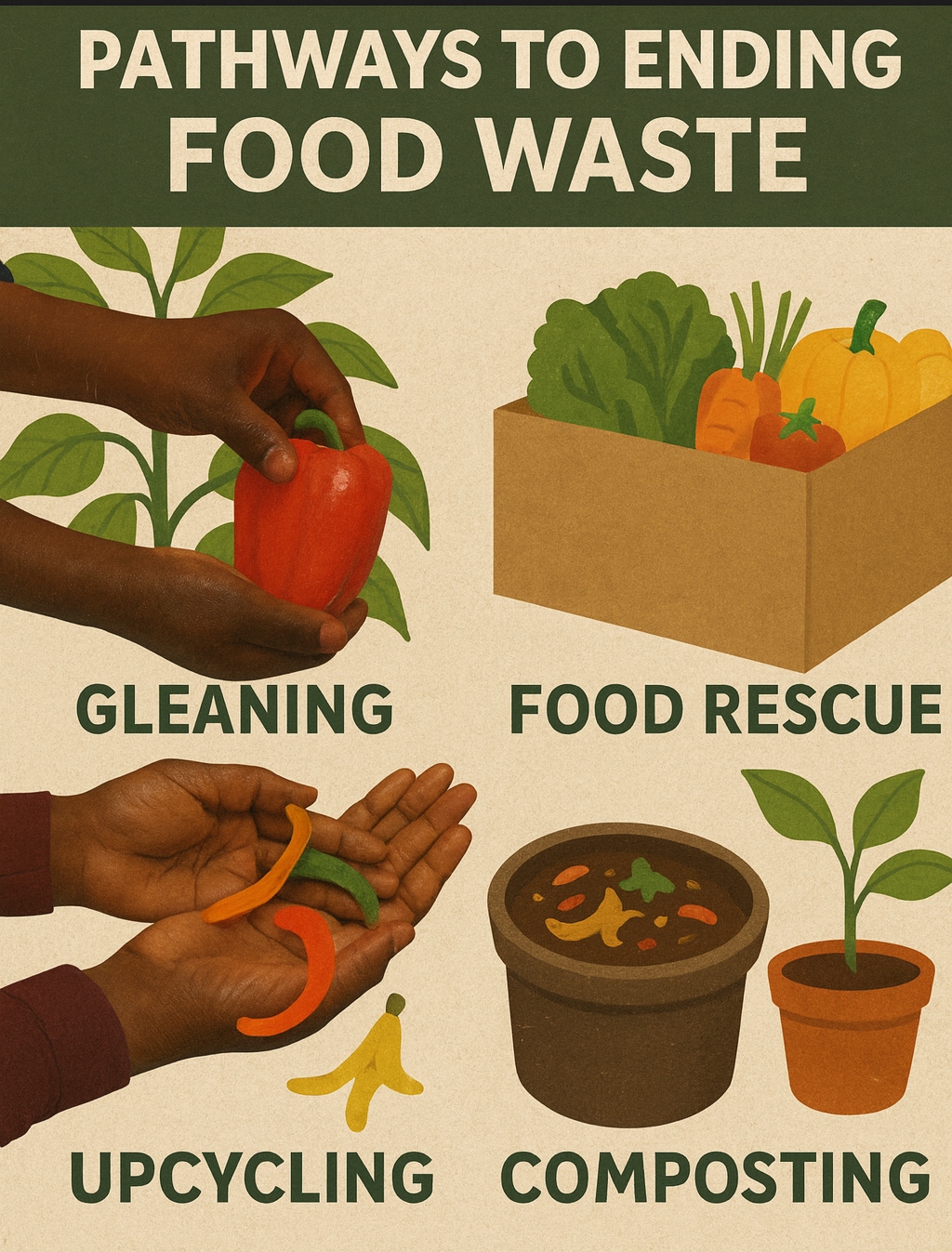
But what if we looked at food waste not just as a problem to be solved, but as a continuum of opportunities? Along that continuum are different ways to successfully address food waste : from the field, in the marketplace, in our individual kitchens, and finally, as a valuable additive we can put back into the soil. By shifting our perspective, we can see food waste not as an inevitable by-product of the system, but as a place for creativity, care, and collective action.
The first stop on this continuum is gleaning—a practice as old as agriculture itself. Gleaning means harvesting crops that would otherwise be left behind in the fields. This can happen because crops don’t meet market standards or due to growth imperfections or reduced late season demand. Across the country, volunteers and community groups are reviving this tradition, ensuring that food which might have gone unpicked instead reaches families who need it. Gleaning is not only about reducing waste, but also about the partnership that is so vital between local farmers and neighboring communities.
Moving along the continuum, food rescue takes place further down the supply chain—intercepting surplus food from restaurants, grocery stores, and distributors before it’s discarded. Nonprofits and food pantries have long relied on these donations, but now digital platforms and mobile apps are making it easier to connect businesses with organizations that can quickly redistribute meals and ingredients. Food rescue highlights the role of technological innovation and coordination in tackling waste at the retail level, transforming potential loss into nourishment.
Two other practices round out this continuum. Upcycling creates entirely new products out of food scraps and by-products—think of tomato skins reborn as sauces or juice pulp transformed into snacks. Or fruit made into delicious sweet preserves. This approach extends the life of food while supporting small businesses and entrepreneurs who see value where others see waste.
Finally, composting ensures that what truly cannot be eaten or upcycled is responsibly returned to the soil, closing the cycle by rebuilding fertility and reducing emissions. Together, gleaning, food rescue, upcycling, and composting form a holistic way of thinking about food waste—one that recognizes multiple points of intervention and multiple opportunities to act. This is what it means to work toward ending food waste—and each of us can and must take part in one or more of these pathways. Reducing the food waste footprint means more people have access to healthy nutritious food, our climate is improved by cutting the reduction of destructive gasses and we generate nutrient rich organic material that enhances new crop production in personal gardens, community gardens and on farms.